
Do NOT follow this link or you will be banned from the site!
Memphis Web Programming
Submitted by thedosmann on Fri, 02/28/2014 - 08:40
Thedosmann's Blog


NYT- Technology
-
The table stakes for small companies to compete with the likes of Microsoft and Google are in the billions of dollars. And even that may not be enough.
-
Demis Hassabis and Mustafa Suleyman, who both grew up in London, feared a corporate rush to build artificial intelligence. Now they’re driving that competition at Google and Microsoft.
-
The spending that the industry’s giants expect artificial intelligence to require is starting to come into focus — and it is jarringly large.
-
The National Highway Safety Administration also released an analysis of crashes involving the system that showed at least 29 fatal accidents over five and a half years.
-
The oil-rich kingdom is plowing money into glitzy events, computing power and artificial intelligence research, putting it in the middle of an escalating U.S.-China struggle for technological influence.
Techradar
-
The sun continues to set on the iconic Windows Control Panel, as another key part, the Fonts page, makes its way to the Settings app instead. The Control Panel isn’t on the way out just yet, but it's directing users to the Settings app for an increasing number of functions. And now, reports suggest that later this year, if you try to open the Fonts page from the Control Panel you’ll be automatically redirected to the Settings app.
The Fonts page can currently be found in the following location:
Control Panel > Appearance and Personalization > Fonts
This is the latest development in an ongoing migration process that Windows Latest has been documenting for several years, which has seen features transition from the Control Panel to the Settings app. Windows Latest reports that Microsoft doesn’t currently seem to have plans to completely remove Control Panel from regular Windows 11 versions.
(Image credit: Future) The next version of font management in Windows 11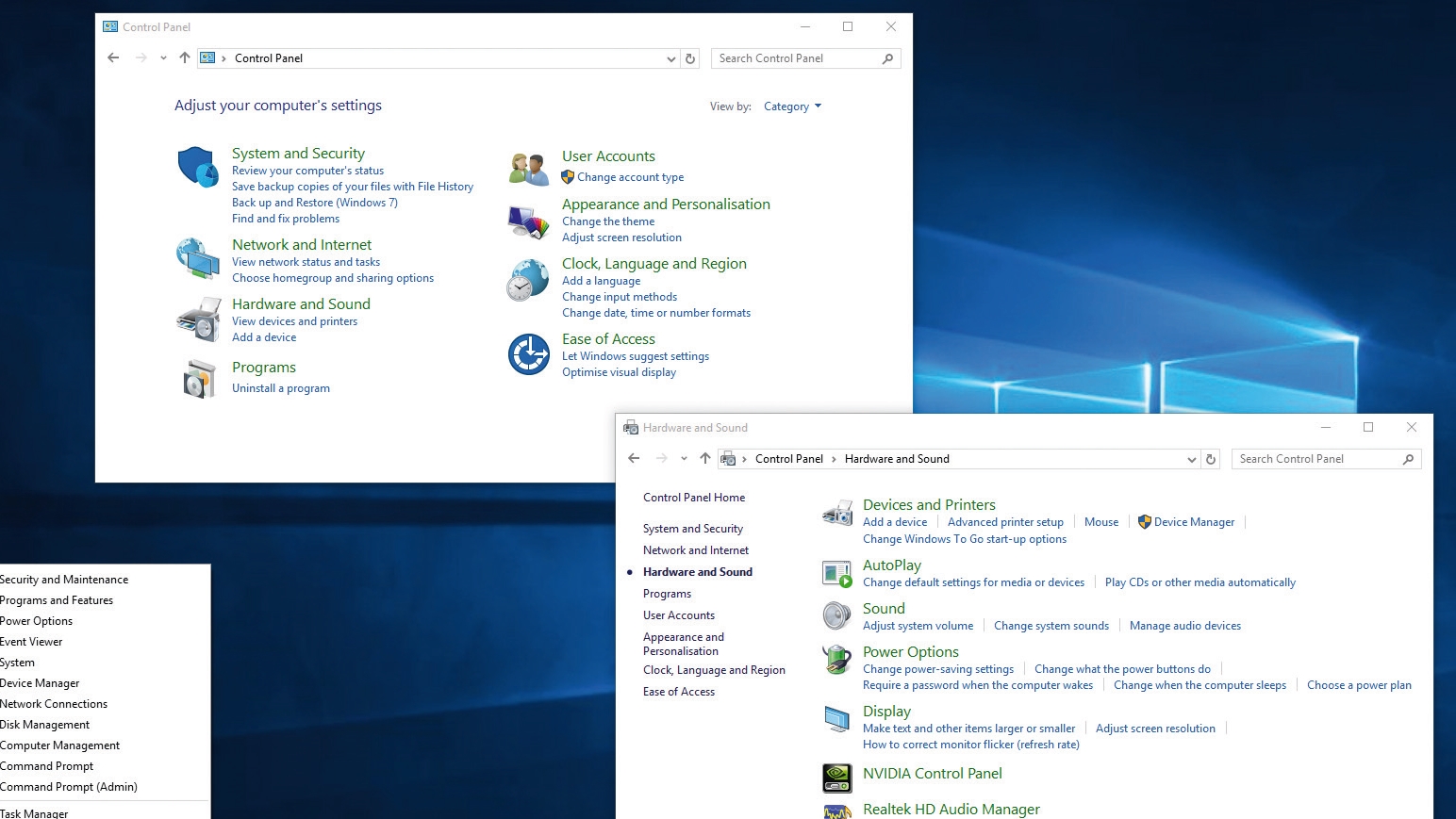
Over in the Settings app, there will be a modern font management interface and it will work similarly to its Control Panel predecessor. At the moment, the legacy version of the Fonts page still exits and can be found in Control Panel, and it can be located using Windows Search.
Here, you can browse the fonts available on your system and use the legacy font management page.
That said, Microsoft wants to guide users to the Settings app for font management and Windows Latest writes that Fonts will be completely removed from the Control Panel in a future Windows update. Instead, users will be redirected to Settings > Personalization > Fonts, which is where the new Fonts page resides.
This will be a noticeable change, but it shouldn’t be too disruptive as it apparently has all of the functionality and features of the legacy page. Also, the future update probably won’t remove the legacy Control Panel Fonts page right away, and users will still be able to find it in C:\Windows\Fonts within File Explorer.
If you’re particularly annoyed by the change and want to stick to the classic interface, you can create a shortcut link in your Settings page which will open the above location in File Explorer as well.
Again, Microsoft is pretty insistent that it would like users to get used to performing font management through Settings, and when Windows Latest opened the Fonts page in File Explorer, it got this message:
“This page is being decoupled from Fonts Control Panel. For more font settings, go to the Fonts page in the Settings app.”
A lot of users are used to Control Panel, which has been a part of Windows since the very first version in 1985, so Windows Latest thinks it’s here to stay. What will change is that with every new feature that’s migrated to the Settings app from Control Panel, users will be redirected to the new analogous page in Settings.
I think this is a wise decision from Microsoft as it makes sense to have a single place where you can manage all of your computer’s settings, especially as new generations of people are introduced to the operating system. It’s preserving the interface and (it seems like) full functionality of Control Panel, while attaching it to the new architecture that’s being built in a way that isn’t especially disruptive or difficult for existing users.
YOU MIGHT ALSO LIKE- One of Microsoft’s biggest Windows 11 updates yet brought a massive number of security flaw fixes
- Windows 11 Moment 5 update reportedly causes a ‘white screen of doom’ along with installation failures
- Windows 11 users are getting fed up with the performance of the OS – including an ex-Microsoft senior engineer
MWP Fan Page
https://www.facebook.com/519230966868849/posts/957270286398246 (Feed generated with FetchRSS) |
Wednesday, April 24, 2024 - 09:28 |
Share it now!